
Nokia Just Reported Earnings. Why Is The Stock Selling Off?
Despite 105% AI growth, Nokia is still primarily a telecom company with limited capacity to convert its order book.

Nokia reported Q2 today.
A lot of people bought into this print and aren't sure what to make of it, so here's the overview.
This isn’t a business where headline revenue growth tells you much. At first glance the numbers look underwhelming: reported operating loss of €50M, 0.00 EPS, negative €732M free cash flow, and no operational guidance raise.
Then you get to AI & Cloud.
Before we begin, this Substack is for informational and entertainment purposes only and does not constitute financial advice. Past performance is not indicative of future results. Never invest more than you can afford to lose. Our writers may hold positions in the securities discussed and may buy or sell them at any time without notice.
The Most Important Number
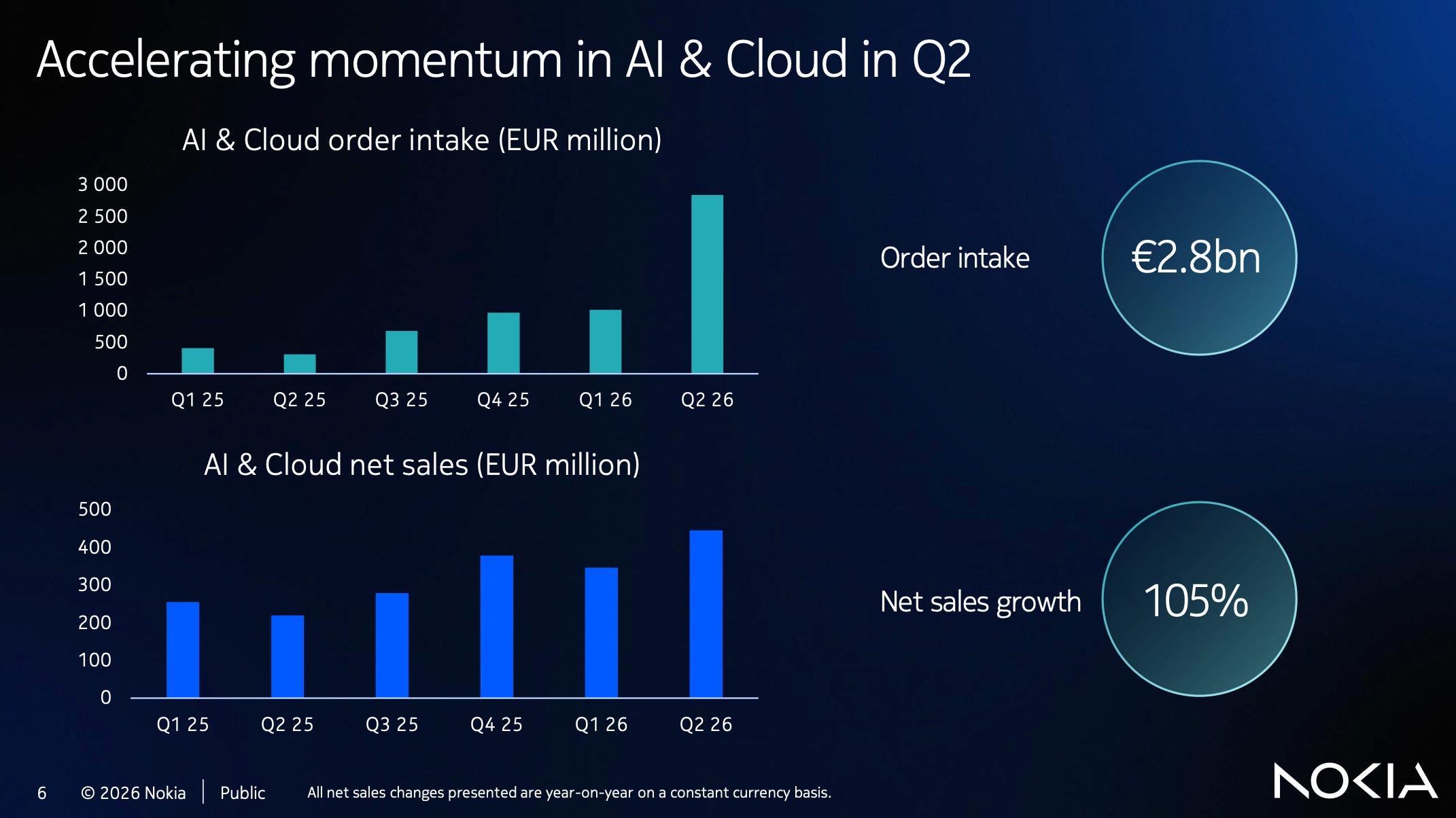
AI & Cloud revenue grew 105% YoY, while the telecom business grew 4%.
€446M in Q2, up from €220M a year ago. Up 29% sequentially. That’s now roughly 9% of group revenue, against about 4% last year. So one euro in every ten Nokia takes in comes from AI. The entire thesis for this stock is:
This number keeps climbing until the market stops treating Nokia as a telecom stock.
Optical Networks made up 18% of Nokia’s total revenue this quarter, up from the 15% we’d assumed back in May when we built our valuation model. In our model, Optical is the highest multiple part of Nokia’s business, so as it becomes a bigger slice of the pie, the whole company deserves to trade at a richer multiple, even before Nokia grows a single euro of revenue.
The numbers come straight from our model’s sensitivity table. At 15% optical mix, we get a $16.23 price target. At 20% mix, that jumps to $17.86. Optical sitting at 18% today lands us in between, at roughly $17.20, just from the mix shift alone, holding everything else constant.

The mix is doing the work, because Nokia didn’t need to beat on revenue for the valuation to move. More important thing was the segment’s share increase, and it did.
The Order Intake
€2.8B of AI & Cloud orders in a single quarter. Q1 was €1B, so intake roughly tripled sequentially. This means that AI & Cloud is running at about a €1.8B annualized rate and booked €2.8B in three months. Further more, management says roughly half should convert to revenue within twelve months.
Bernstein’s Ulrich Rathe asked what a normal order book looks like, and Hotard’s answer was:
“Typically we have seen orders within 12 months in our customer base... that’s really the shift.”
Historically, basically all of Nokia’s orders converted inside a year and now half of them sit beyond that: a longer book is a different asset than a bigger one. Nokia is now asking telco customers for the same extended visibility, because as Hotard put it
“We need to be planning even further.”
Intake was spread across optical and IP, weighted toward optical, and it included the data center switching design wins Nokia flagged last quarter. They also booked their first Multi-rail design win with a major customer, on a product they only launched at OFC in March.
Q2 benefited from several large long term orders as customers moved to lock in supply, and nobody should expect €2.8B every quarter. His framing on how to read it:
“Are we seeing the order momentum grow as we look at it over a time period? And right now, what we’re seeing is continued growth and continued demand in the market.”
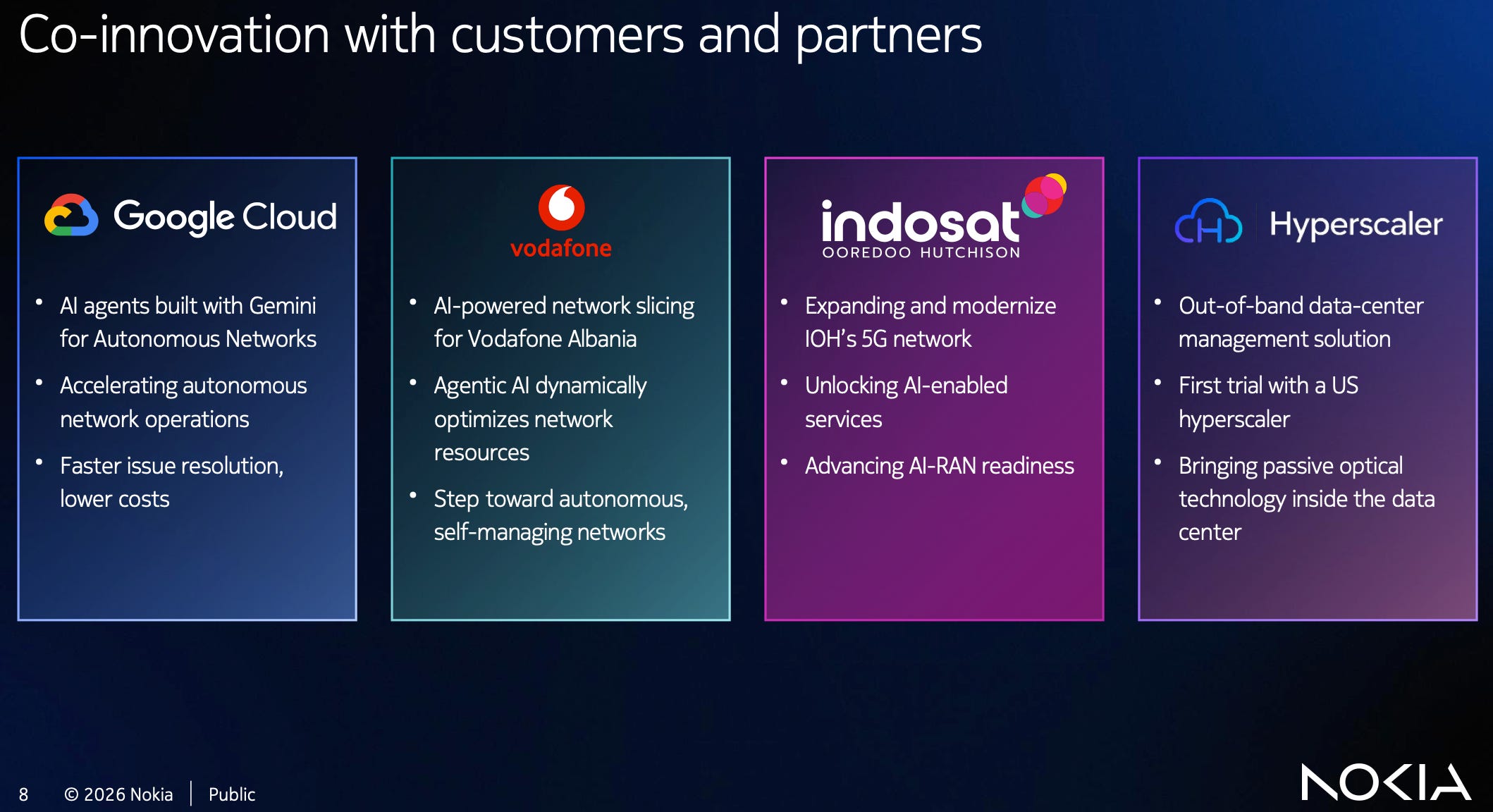
New Hyperscaler Trial
Nokia entered trials with a US hyperscaler for Aurelis, an out-of-band management solution that sits inside the data center, built on the same PON technology and Aurelis OLT hardware Nokia already sells through its Fixed Networks business for residential and business broadband.
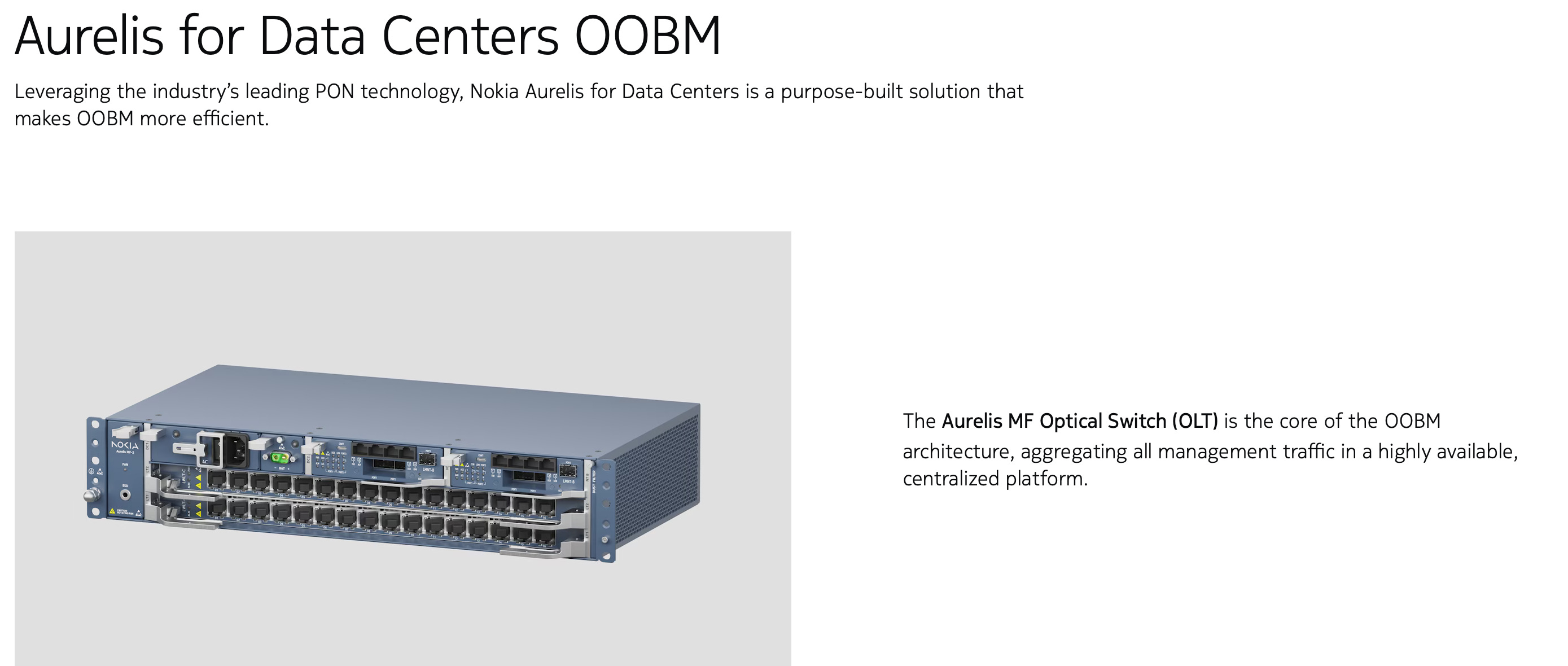
It’s one trial with one customer and Nokia hasn’t disclosed which hyperscaler or a timeline for broader rollout, but it’s a new product category inside the data center, which is positive.
Why No Raised Guidance?
They booked €2.8B in orders and left operational guidance untouched. The range moved from €2.0–2.5B to €2.1–2.6B, but that’s technical, fixed wireless access CPE and enterprise campus edge moved into discontinued operations. Nothing operational changed, still tracking somewhat above the midpoint.
Moreover, Nokia is supply constrained. Danske’s Sami Sarkamies asked whether they were fully constrained or had built any inventory in the first half:
“There are always pockets... legacy products and those areas where we probably have some supply. But in general, I would think of us as being constrained. We talk about lead times elongating. It’s because we’re seeing constraints and particularly on the leading edge products.”
Then he described what’s in the forecast:
“What we’ve included in our forecast is the demand that we have line of sight to shipping. And we recognize even that has some risk because that assumes continuity of supply, no disruptions, everything goes perfectly. […] If there was more supply, I think we’d probably generate more revenue.”
Guidance didn’t move because the factory couldn’t keep up, which is extremely important in terms of future outlook.
Arizona Is The New Information
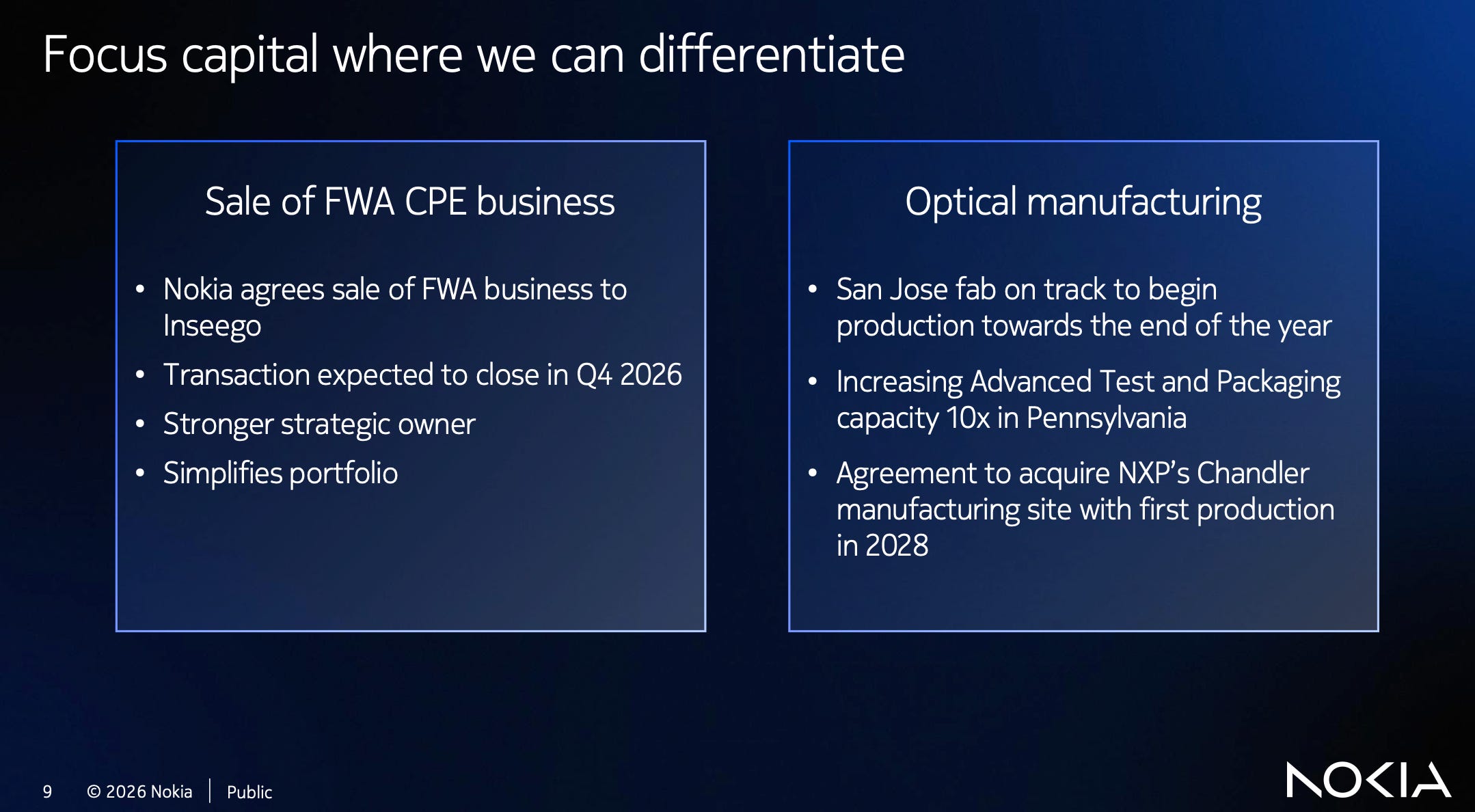
We already knew about San Jose ramping and Pennsylvania test and packaging going up tenfold. San Jose is now processing test wafers, with volume production targeted by year end.
Arizona is new, Nokia is acquiring NXP’s Chandler plant and converting it to indium phosphide. That’s a shortcut because: you inherit the cleanroom, the power, the permits and the environmental approvals, which is everything that takes years when you start from bare land.
Hotard gave a timeline for this fab:
“This new fab is really looking at coming online, probably earliest in 29... we’ve got a significant jump up with San Jose coming, call it 27 as it ramps volume. Then we kind of line up for a 29 ramp and an incremental capacity.”
So the capacity steps are 2027 and 2029. Nokia is committing capital today for supply that lands two to five years out.
He was also explicit that InP isn’t a problem Nokia solves alone:
“That’s obviously an industry issue. It’s something that all of us in the industry need to enable.”
On yields, asked by Deutsche Bank whether Nokia has line of sight to best-in-class six-inch yields, he pointed at the whole supply base including the Chinese manufacturers in the space and framed 2027 as a period of “maturity and learning as we scale”.
If you own $COHR, $LITE, $AAOI or anything else in the optical supply chain, that information should satisfy you. This stays a capacity constrained industry through 2027 at minimum.
Four DSPs, Not Two
When Nokia acquired Infinera, the pitch was €200M of synergies by 2027. Most of the investors (including many analysts) read that as: consolidate the duplicate teams and bank the savings. Nokia and Infinera were each developing two coherent DSPs, so the obvious move was to cut down to two.
They kept all four. Hotard, to Morgan Stanley:
“One of the decisions we made as we saw the growth opportunity emerging in optical was to maintain the DSP team as is versus reducing them... we could actually deliver more differentiated products to them with four unique DSPs versus the traditional two that we had been delivering in each company independently.”
The reasoning is that the optical fabric has split into different problems:
scale-across between buildings on a campus,
data center interconnect across metro distances,
long-haul transport
And each wants different silicon. They were right when saying that two DSPs cover that poorly.
So Nokia turned down an easy cost synergy to buy product coverage in 2027.
Where the Print Is Weak
Honestly, aside from the AI & Cloud, Hotard just didn’t sound that upbeat on this call.
He flat out told people not to expect €2.8B of orders every quarter and called it “lumpy”. He admitted IP Networks margins are going to stay dragged down for a while before they get better. None of that is bad news exactly, it’s just not the kind of talk you want from management that thinks it crushed the quarter. The mismatch between a great AI order number and everything else sounding pretty muted is probably a good chunk of why the stock got sold off today.
Network Infrastructure gross margin was strong, up 240bps to 42.7% on scale, Infinera synergies and mix. But NI operating margin came in at 8.1%, right on consensus. The more bullish sell-side models were closer to 10%, and Network Infrastructure operating leverage was their entire reason for sitting above the street.
The beat came from Mobile instead, technology standards rose 15% on new licensing agreements including catch-up recognition, software revenue expected in Q3 landed in Q2, and a positive venture fund revaluation below the operating line flattered EPS.
BNP asked how long before AI revenue becomes materially accretive:
“We’re doing a lot of work at the front end of the three year period to really set the company up to become more efficient, more nimble, more scalable, and get the operating leverage as we drive growth in the business... by nature, that would be a little bit back end loaded.”
Which means that the margin is deferred by design and that’s a defensible answer. It also means anyone modelling 2026 operating leverage off Q1’s trajectory needs to push it out a year.
Additionally, Mission Critical Enterprise & Defense declined 3%. That segment grew 19% in Q1, and we flagged the Anduril and Lockheed partnerships as free optionality. One quarter surely doesn’t undo a multi-year government spending thesis, but it didn’t print well and we’re not going to pretend otherwise.
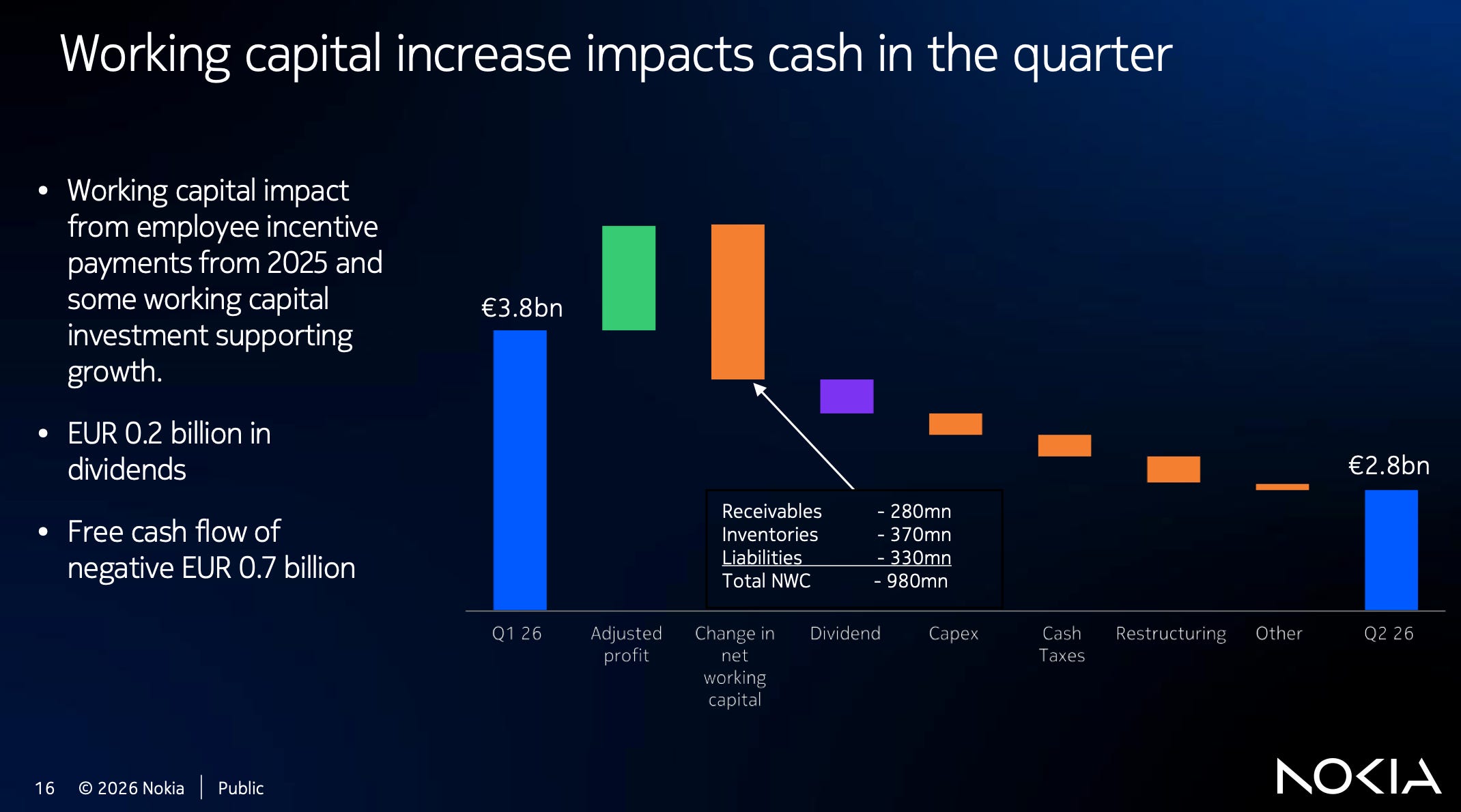
Free cash flow conversion now tracks toward the low end of the 55–75% range on higher restructuring and working capital. Q2 free cash flow was negative €732M with roughly €980M of working capital build, which is seasonal since employee incentives are paid in Q2, and net cash still finished at €2.8B.
Risks Worth Flagging
Double ordering.
The best question on the call. Bernstein asked whether a supply-constrained market is producing false demand signals through customers ordering across multiple vendors. Hotard’s answer had two parts, and both are stronger than we expected.
“For one of these customers to come in and say I’m going to double order with you, when ultimately that goes back to supply of leading edge silicon manufacturing capacity on optical components that they can actively inspect and we transparently share the progress - the question for them would be, what does it do in terms of incentives?”
In other words, these customers can see Nokia’s actual fab capacity, so padding an order doesn’t manufacture allocation. And the second part: “as we’re making commitments on a longer term basis, we’re expecting those commitments from customers as well”. Which means the visibility happens on both sides.
Memory and component costs.
Hotard ranked memory as the most significant supply pressure Nokia faces, citing the pricing change driven by shortage. Their response is securing supply, simplifying designs, reducing scope and passing costs through. Passing costs on to customers works with AI and cloud buyers, who Hotard says understand the market. It's harder with telcos locked into multi-year frameworks.
Customer concentration.
Asked how broadly spread the IP customer base is, Hotard said it’s “fairly concentrated today, but that’s the way you build the business”. A €2.8B order number which rests on a short list of names carries a big single customer exposure.
Order front-loading.
Campus builds don't spend evenly. The first building on a site takes the full stack of gear, and every building after it needs less, since shared infrastructure is already in place. These campuses get built out over a decade or more and if that pattern holds across Nokia's customer base, €2.8B reflects a burst of first-building orders landing at once.
What to Watch From Here
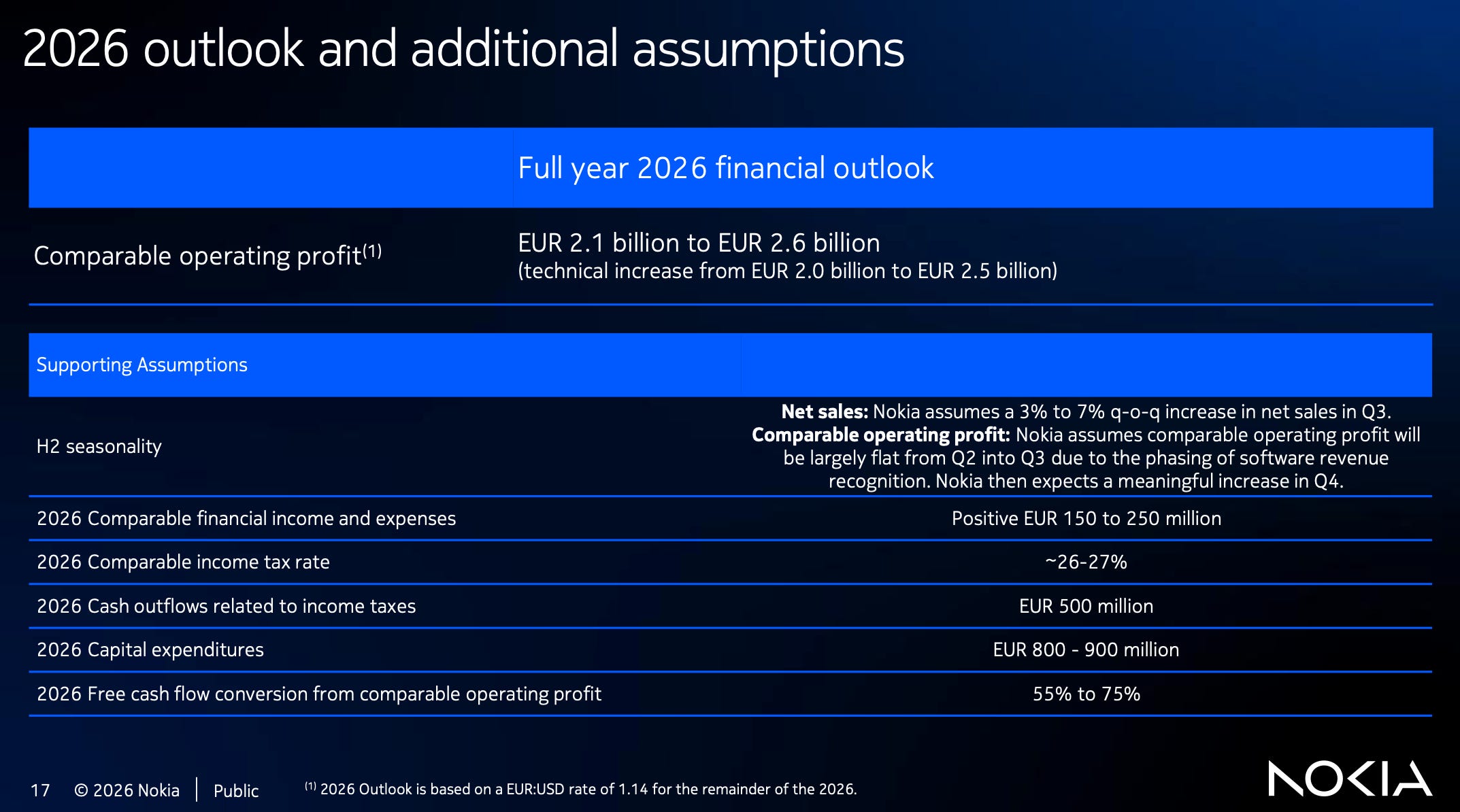
Management guides Q3 operating profit roughly flat against Q2 on software revenue phasing, with net sales up 3–7% sequentially. The step up comes in Q4, which means Q4 profit has to roughly double. Marco’s explanation is normal telecom seasonality plus the AI and cloud contribution. Which means the proof point on this year is the January print.
On AI-RAN, ten public customers are lined up for pilots later this year, with T-Mobile as the US lead. Commercial in 2027, volume in 2028. Hotard’s framing:
“When you look at leading edge silicon, you do the math on the cost of leading edge silicon - and, by the way, the supply constraints on leading edge silicon. In my mind, this is a very clear industry shift that has to happen on the baseband. And that is a shift to general purpose silicon.”
He went further and said the returns in this industry haven’t been acceptable for operators or for suppliers, Nokia included. We don’t get to hear a sitting CEO say that about his own business often and it’s also the argument for why he’s moving the company off custom baseband silicon.
Bottom line
We’re still bullish on NOK 0.00%↑, especially for its unpriced upside on AI-RAN with the 6G revolution. Jensen Huang invests in companies for a reason, and Nokia is a part of an exclusive club.
Overall though the print itself wasn’t great, outside of AI & Cloud numbers, the language from management was pretty disappointing. We expect a lot of volatility across networking names over the next few months, and even with Nokia sitting under $10, we think there is more upside on trading earnings plays from names like $LITE, $COHR, and CIEN 0.00%↑ in the optical networking space.